Ring care guidance · 02
How to Clean Your Engagement Ring at Home
A little warm water, mild soap, and a soft brush are usually enough for a careful home clean. Work over a bowl or away from an open drain.
Laura Luxe education · 3 min read
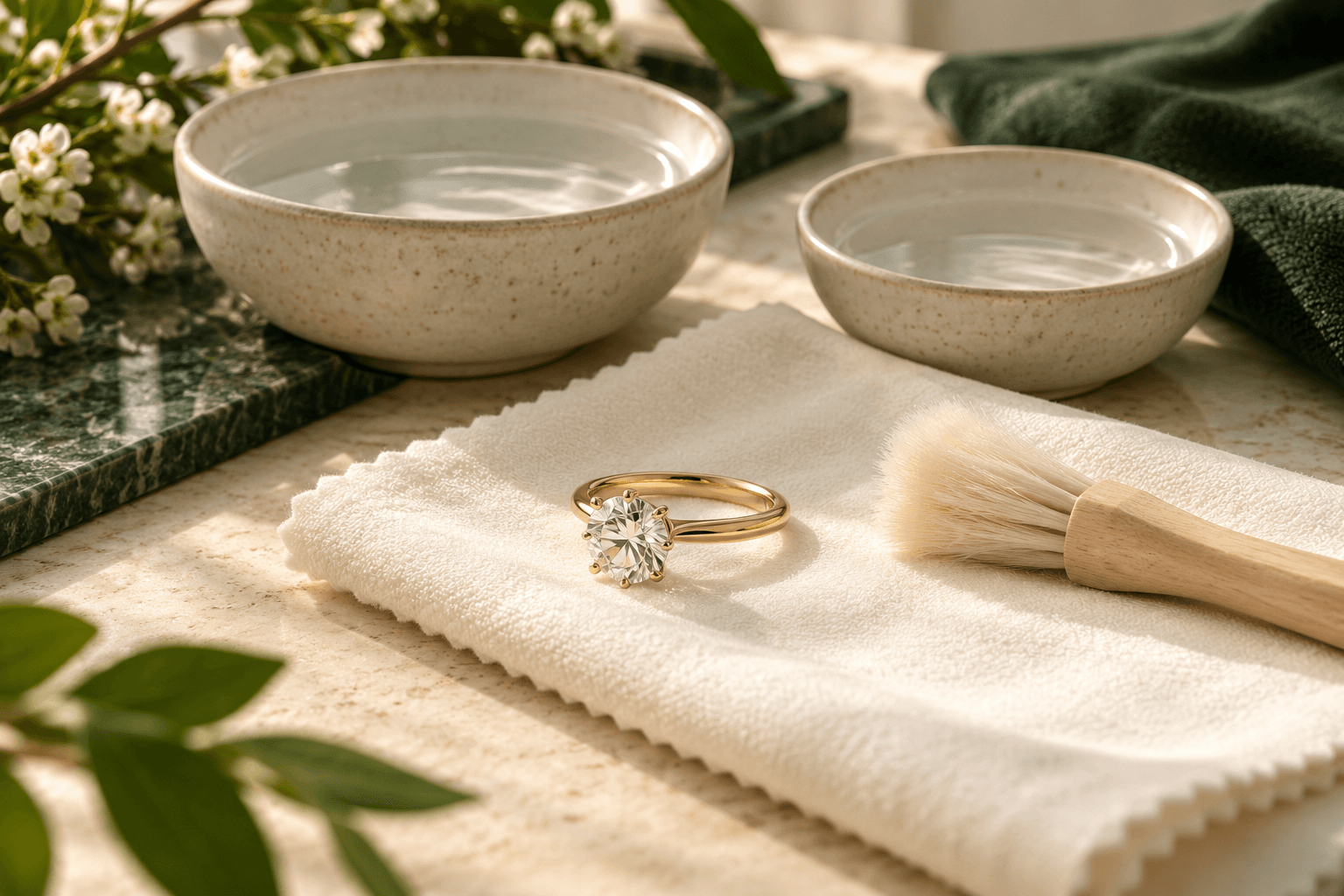
1. Prepare a safe surface
Use a small bowl or a plugged sink. Fill it with lukewarm water and add a few drops of mild, non-moisturising dish soap.
2. Soak and brush gently
Let the ring sit for 10–15 minutes, then use a very soft toothbrush to loosen residue around the setting and beneath the stone.
3. Rinse and dry
Rinse in clean lukewarm water, keeping hold of the ring, then pat dry with a lint-free cloth. Let it air-dry fully before wearing.
What to avoid
Avoid bleach, chlorine, abrasive powders, toothpaste, ultrasonic cleaners, and sudden temperature changes unless a professional has confirmed they are suitable for your piece.
Before you begin: check the setting
Look at the ring under good light. If a claw is bent, a stone seems loose or the piece recently caught on something, skip home cleaning and ask a jeweller to inspect it. Cleaning should not be used as a way to investigate a suspected loose stone.
Confirm that the piece is a suitable diamond and precious-metal ring. If it includes other gemstones, adhesives, a special surface finish or unknown treatments, get specific advice before soaking it.
Gather a small, gentle cleaning kit
Use two small bowls, lukewarm water, a little mild dishwashing liquid, a very soft brush and a clean lint-free cloth. Choose a plain cleaner without bleach, abrasives or added moisturisers. A brush reserved for jewellery avoids residue from other tasks.
Set the bowls on a stable surface away from an open drain. Good lighting helps you see the underside of the setting. Lay out the cloth first so you have somewhere safe to place the wet ring.
- Use lukewarm rather than hot water.
- Choose a very soft brush with clean bristles.
- Keep every step away from open drains.
- Do not use toothpaste or abrasive powders.
Work beneath the stone without forcing the brush
After the gentle soak described above, brush the accessible metal and the underside of the diamond using light strokes. Residue often sits beneath the centre stone, but bristles should not be forced into narrow gaps or under claws.
If dirt remains, repeat a gentle soak rather than scraping it with a pin or hard tool. Stop if the brush catches on a claw or the setting appears to move. Persistent buildup in an inaccessible area is a reason to ask for professional cleaning.
Rinse in a bowl and let the ring dry
Move the ring into a second bowl of clean lukewarm water to remove soap. Pat it dry gently with the lint-free cloth and leave it in a secure place to dry fully. Check the bowl before emptying it, especially if the piece has many small stones.
Do not use a hair dryer or a sudden change of water temperature to speed the process. If the ring still looks cloudy after residue is removed, have it assessed rather than escalating to stronger chemicals.
When professional equipment needs professional advice
Ultrasonic and steam cleaners can be unsuitable for some settings, treatments or damaged pieces. The fact that a diamond tolerates a cleaning method does not mean every component of its ring will do so.
Ask a jeweller to check the piece before using such equipment at home. Gentle routine care and periodic assessment are more useful than buying a powerful machine without knowing whether the design is suitable.
Your checklist
- Inspect before soaking; stop if anything seems loose.
- Use two bowls and mild soap.
- Brush lightly, with no tools forced under claws.
- Rinse fully and dry without heat.
- Seek advice if residue or cloudiness persists.
Common questions
Can I use toothpaste?
No. Abrasive ingredients can mark metal and finishes. Use a mild, suitable soap and a soft brush.
How often should I clean it?
Use visible residue and your jeweller’s advice as a guide. An occasional gentle clean is usually more appropriate than aggressive daily scrubbing.
What if a tiny stone comes out?
Stop, keep the ring and any recovered stone securely, and contact a jeweller. Do not continue cleaning or attempt to glue the stone back.
Continue exploring
Make the details personal.
Share your references, questions and preferred budget with Laura Luxe for advice about your piece.
Contact Laura Luxe