Ring care guidance · 01
Engagement Ring Care Guide
Good care is mostly about awareness: knowing when to take the ring off, how to store it, and which small checks can catch a problem early.
Laura Luxe education · 3 min read
When to remove it
Take your ring off for cleaning, swimming, gardening, heavy lifting, and activities where it may be knocked or exposed to chemicals. Put it somewhere safe before you start.
How to store it
Keep it in a soft-lined box or pouch, separately from other jewellery that could scratch the metal or catch on the setting.
Check the setting
Every so often, look closely at the prongs and stone. If anything feels loose, catches on fabric, or looks different, pause wear and arrange a professional inspection.
Protect against pressure as well as scratches
Diamond resists scratching, but the ring also contains metal and a setting that can be bent or worn. Lifting weights, gripping tools or carrying heavy objects can put pressure on the band even when the stone is untouched.
Remove the ring before gym sessions, manual work and contact activities. A practical routine is more useful than trying to remember every possible hazard: keep a secure place ready for the activities you do regularly.
Manage residue without over-cleaning
Lotions, soap and everyday oils can collect beneath a diamond and soften its appearance. Hold the ring by the band when putting it on and allow creams to absorb before wearing it.
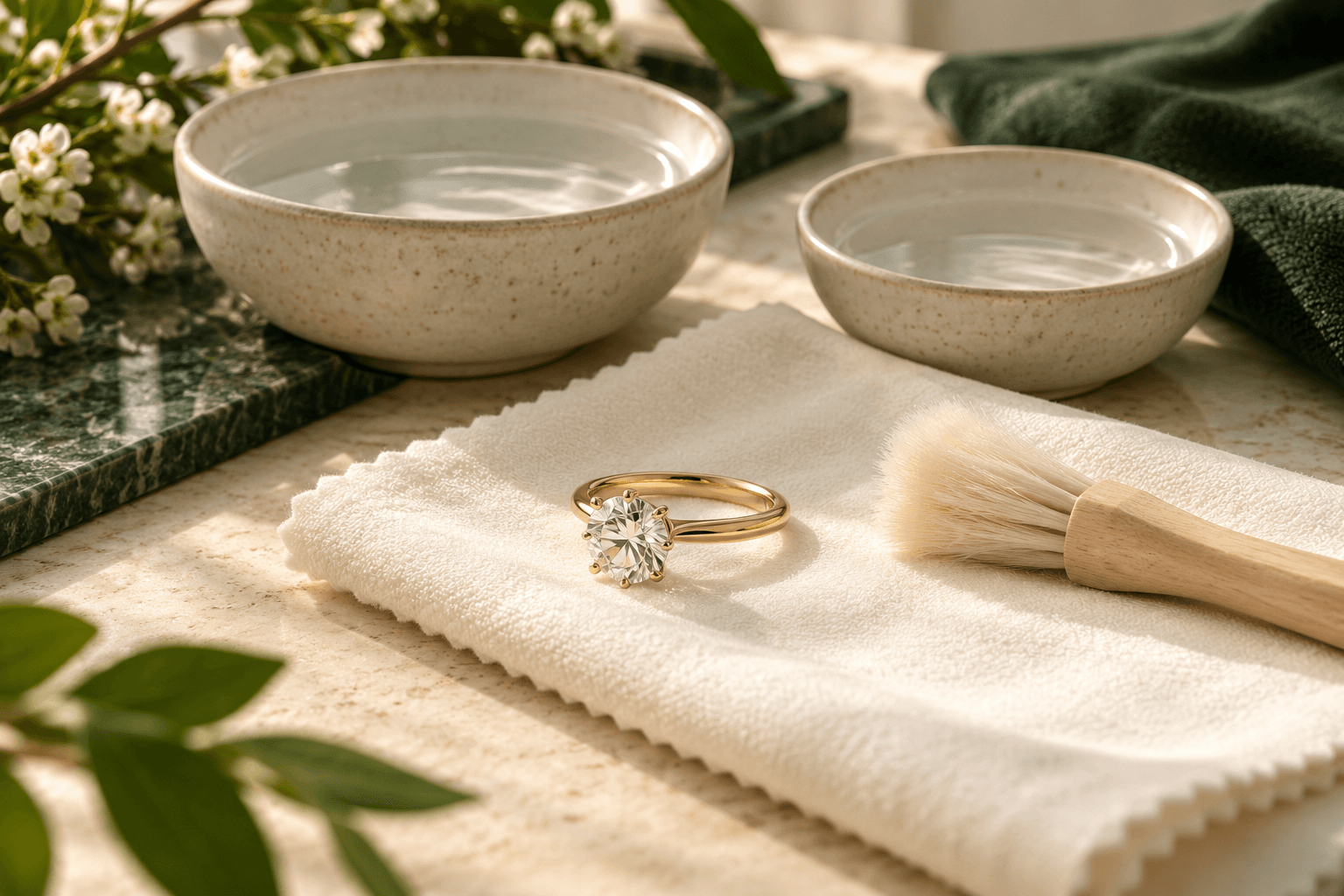
Clean gently when residue becomes noticeable, following the method appropriate to the piece. More force does not create more brilliance. Avoid scraping behind a stone or repeatedly polishing plated surfaces with an abrasive cloth.
Recognise signs that need attention
A claw catching on fabric, a stone sitting at a new angle, a bent shank or an unusual sound can indicate a setting problem. Stop wearing the ring and keep it in a secure container until a jeweller can inspect it.
Do not try to tighten a claw with household tools. Pressure in the wrong place can damage the stone or make the setting less secure. After a significant knock, arrange a check even if the ring still looks normal at first glance.
Store, travel and service thoughtfully
Give each piece its own compartment so diamonds cannot rub against other jewellery. For travel, a closed padded case is useful; avoid leaving rings in a bathroom or taking them off in public washrooms unless you can store them securely.
Keep the invoice, stone report and any servicing record together. If a repair or resizing is needed, share the original specification and explain what has changed. Ask what aftercare work is included and what is charged before sending the piece.
Your checklist
- Remove before lifting, swimming and chemical cleaning.
- Handle by the band where practical.
- Check for snagging or changes in stone position.
- Stop wearing a damaged or loose setting.
- Keep servicing and purchase records together.
Common questions
Can I sleep wearing my engagement ring?
Taking it off reduces the chance of catching bedding and applying pressure while asleep. Store it in a secure place.
Is a diamond ring safe in a swimming pool?
It is better to remove it. Pool chemicals can affect some metal alloys, and water increases the risk of the ring slipping off.
Will polishing remove every mark?
Not always, and polishing removes a small amount of material. A jeweller should advise on suitable treatment rather than repeated aggressive polishing.
Continue exploring
Make the details personal.
Share your references, questions and preferred budget with Laura Luxe for advice about your piece.
Contact Laura Luxe