Lab-grown diamond guidance · 01
What is a Lab-Grown Diamond?
A lab-grown diamond is a diamond created using advanced technology in a controlled environment. It has the same crystal structure and essential physical and optical properties as a mined diamond.
Laura Luxe education · 3 min read
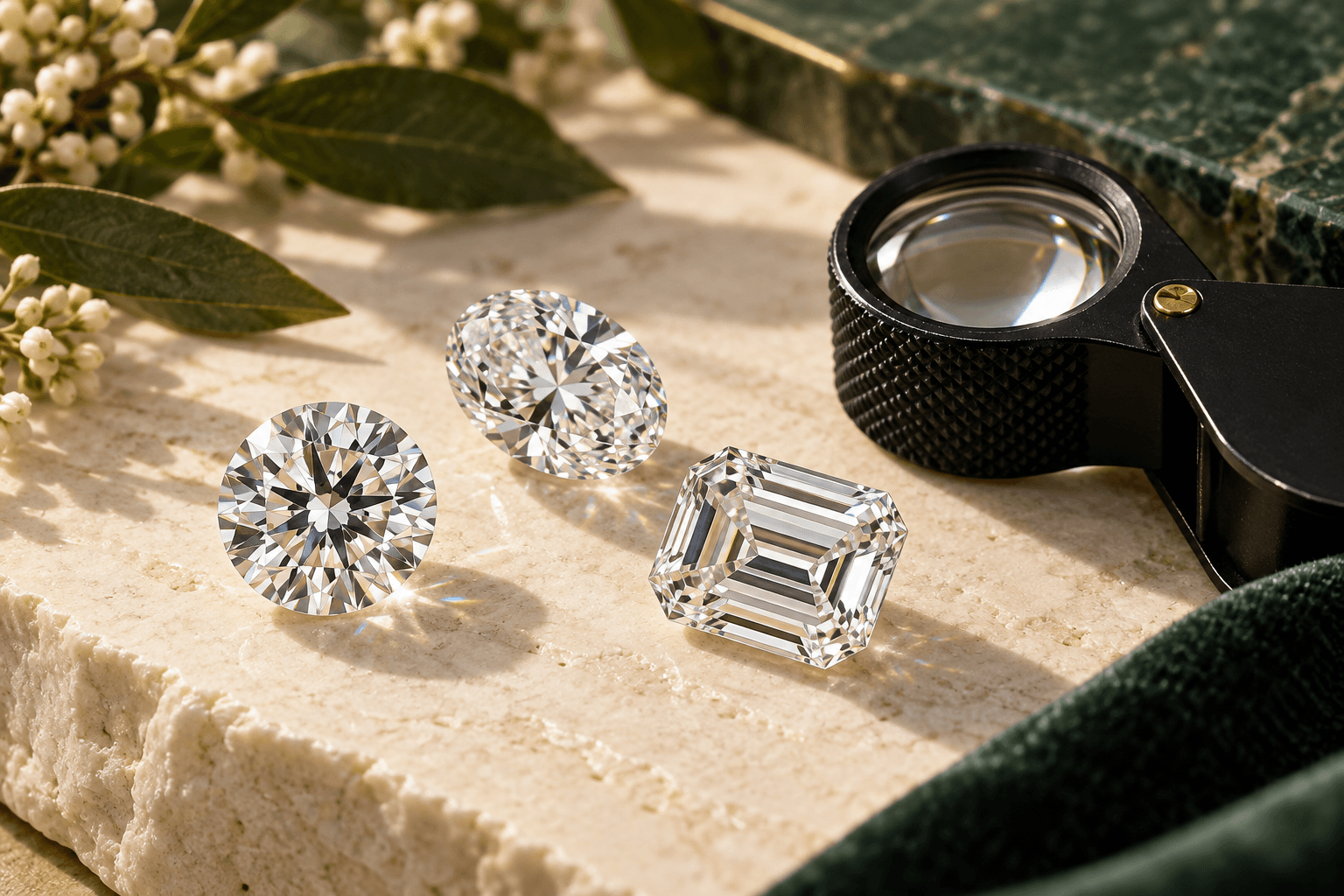
How it is made
Two established methods, CVD and HPHT, recreate the conditions needed for carbon to crystallise as diamond. The resulting rough diamond is then cut and polished by skilled specialists.
What makes it a diamond
A diamond’s identity comes from its carbon crystal structure—not where it was formed. Grading reports help document the stone’s characteristics and quality.
What to look for
Ask for a grading report, compare cut quality, and view the diamond in more than one light. A beautiful stone should look lively, balanced, and right for the design.
Two growth routes, individual results
In high-pressure, high-temperature growth, a diamond seed is exposed to conditions that allow carbon to crystallise onto it. Chemical vapour deposition uses a carbon-containing gas in a chamber, allowing diamond to grow on a seed surface. Both produce diamond rather than a coating on another material.
Growth is followed by decisions about cutting, polishing and sometimes treatment. CVD or HPHT on its own is not a beauty grade. Ask about the finished stone’s appearance and disclosures rather than choosing purely by a growth-method label.
What is shared with natural diamond
Both are crystalline carbon with diamond’s characteristic optical properties and resistance to scratching. Growth origin can leave features that trained laboratories identify using specialist equipment. Those features do not make a lab-grown stone an imitation.
Resistance to scratching is different from resistance to breakage. A diamond can chip, particularly at a vulnerable edge or point if struck. Secure setting design and sensible wear matter for either origin.
Read the report as a description
Check the laboratory name and report identifier, the statement of origin, carat weight, dimensions and the quality information supplied. Read comments and treatment disclosures as well as the headline grade. Use the issuer’s report-check service to verify the document.
A report describes a stone at examination. It is not a promise of future price or an appraisal of the finished ring. Ask your jeweller to connect the documented diamond to the stone being set, including an inscription where present.
Choose for the finished ring
Consider how the stone will look against your preferred metal and whether the setting protects vulnerable corners. A larger outline may require changes to the basket, height or band proportions. Review these details together rather than buying the diamond as an isolated object.
Request ordinary-light footage and a written quote for the complete design. Price, availability and aftercare terms vary, so use current product-specific information rather than a general comparison you read months earlier.
Your checklist
- Origin clearly stated on the documentation.
- Report identifier verified with the issuer.
- Growth and treatment disclosures reviewed.
- Setting designed around the actual stone dimensions.
Common questions
Will a lab-grown diamond lose its sparkle?
Its origin does not make it fade. Oils and residue can reduce apparent brilliance; cleaning a sound setting appropriately can restore its appearance.
Can a basic diamond tester prove origin?
No. A basic tester is not a reliable way to distinguish natural from laboratory-grown diamond. Specialist testing is needed.
Does a report cover the whole ring?
A centre-stone report generally describes that stone. Metal purity, accent stones and the ring’s construction need their own product specification.
Continue exploring
Make the details personal.
Share your references, questions and preferred budget with Laura Luxe for advice about your piece.
Contact Laura Luxe