Lab-grown diamond guidance
Know the stone you are choosing.
A diamond is more than a number on a certificate. Learn how origin, cut, colour, clarity, and carat work together so you can choose with confidence.
Laura Luxe education · 2 min read
Explore this subject
A diamond is personal
The best choice balances visual beauty, budget, and the way you want the finished ring to look. The 4Cs help you compare stones; your eye and your story make the final decision.
Separate origin from quality
Lab-grown describes where the crystal formed. It does not guarantee a particular colour, clarity or level of sparkle. Stones made by the same growth method can look different after cutting, just as stones of the same weight can have very different proportions.
Begin by confirming origin, then compare the individual diamond. Use its grading information together with dimensions and clear moving images. A laboratory report is valuable evidence, but it cannot tell you which outline or facet pattern you will enjoy most.
Build a useful comparison
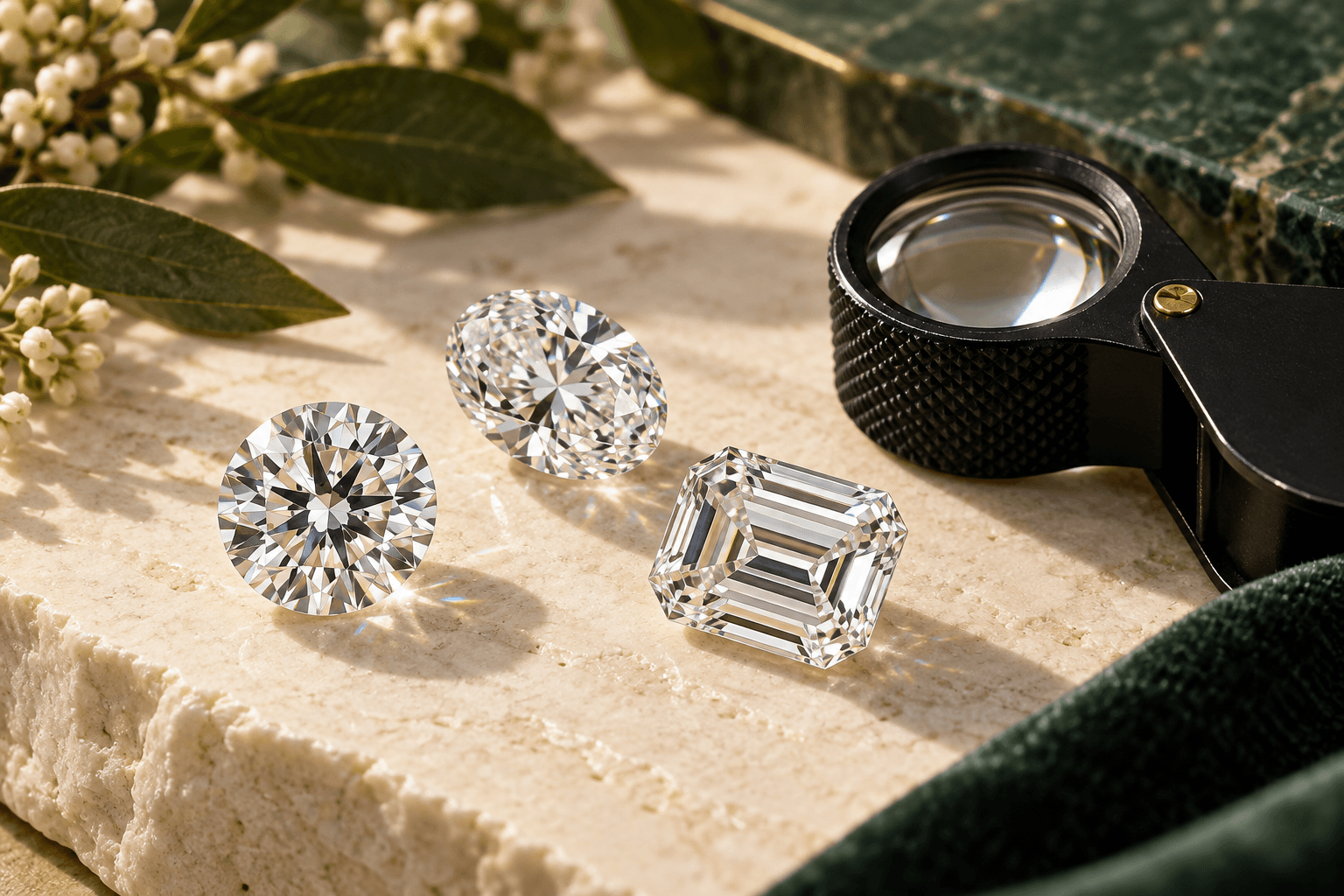
Compare diamonds with similar shape and dimensions before looking at grade differences. Notice whether one appears darker at its centre, whether an inclusion draws your eye, or whether the outline feels too long or too square for your design.
Ask which laboratory issued each report and what that report covers. Grading terminology and services can vary between laboratories and over time. A marketing label without a report should not substitute for a specific description of the stone.
Ask clear questions about provenance
If environmental impact is part of your decision, ask for evidence relevant to the producer or particular supply chain. Laboratory growth uses energy, and its impact depends on how that energy is generated and how production is managed.
Keep product facts separate from broad claims. Origin disclosure, treatment information and documented sourcing are useful starting points. Avoid assuming that every lab-grown diamond has the same footprint simply because the growth category is shared.
Your checklist
- Confirm laboratory-grown origin.
- Compare like shapes and face-up dimensions.
- Verify the report with its issuing laboratory.
- Ask for evidence behind sourcing claims.
Common questions
Are all lab-grown diamonds identical?
No. Growth features, colour, inclusions and cutting vary between stones. Evaluate the individual diamond.
Can I recognise origin just by looking?
Appearance alone is not a reliable origin test. Specialist testing and appropriate documentation distinguish laboratory-grown and natural diamonds.
Make the details personal.
Share your references, questions and preferred budget with Laura Luxe for advice about your piece.
Contact Laura Luxe